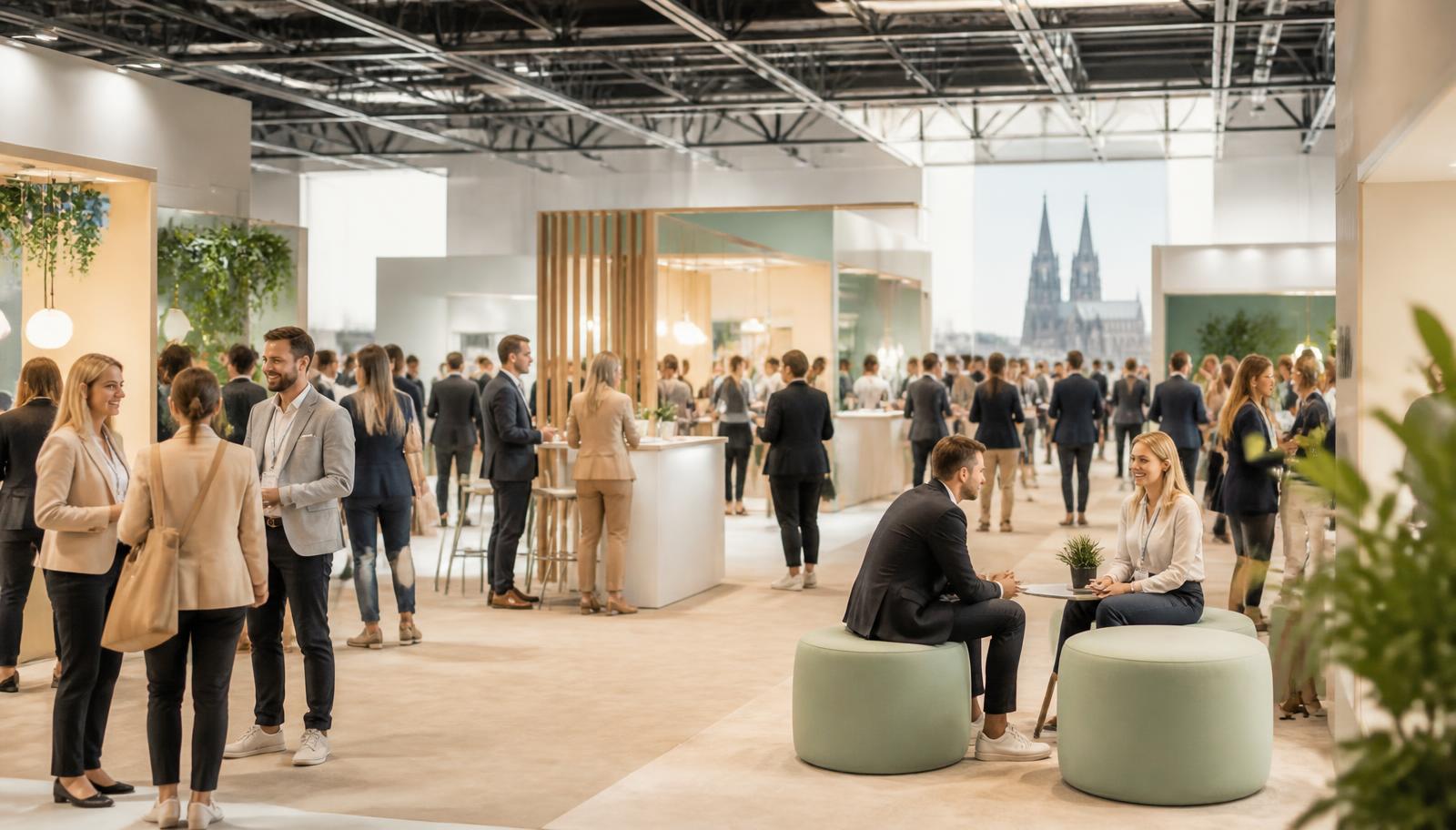
Drees & Sommer Workspace Benchmark Report 2026/27: The Office Is Filling Up Again
Office occupancy has nearly doubled compared to 2023/24 – from 30–40 to 61–70 percent. The new Drees & Sommer Workspace Benchmark Report shows why employees are returning voluntarily and what offices need to deliver.
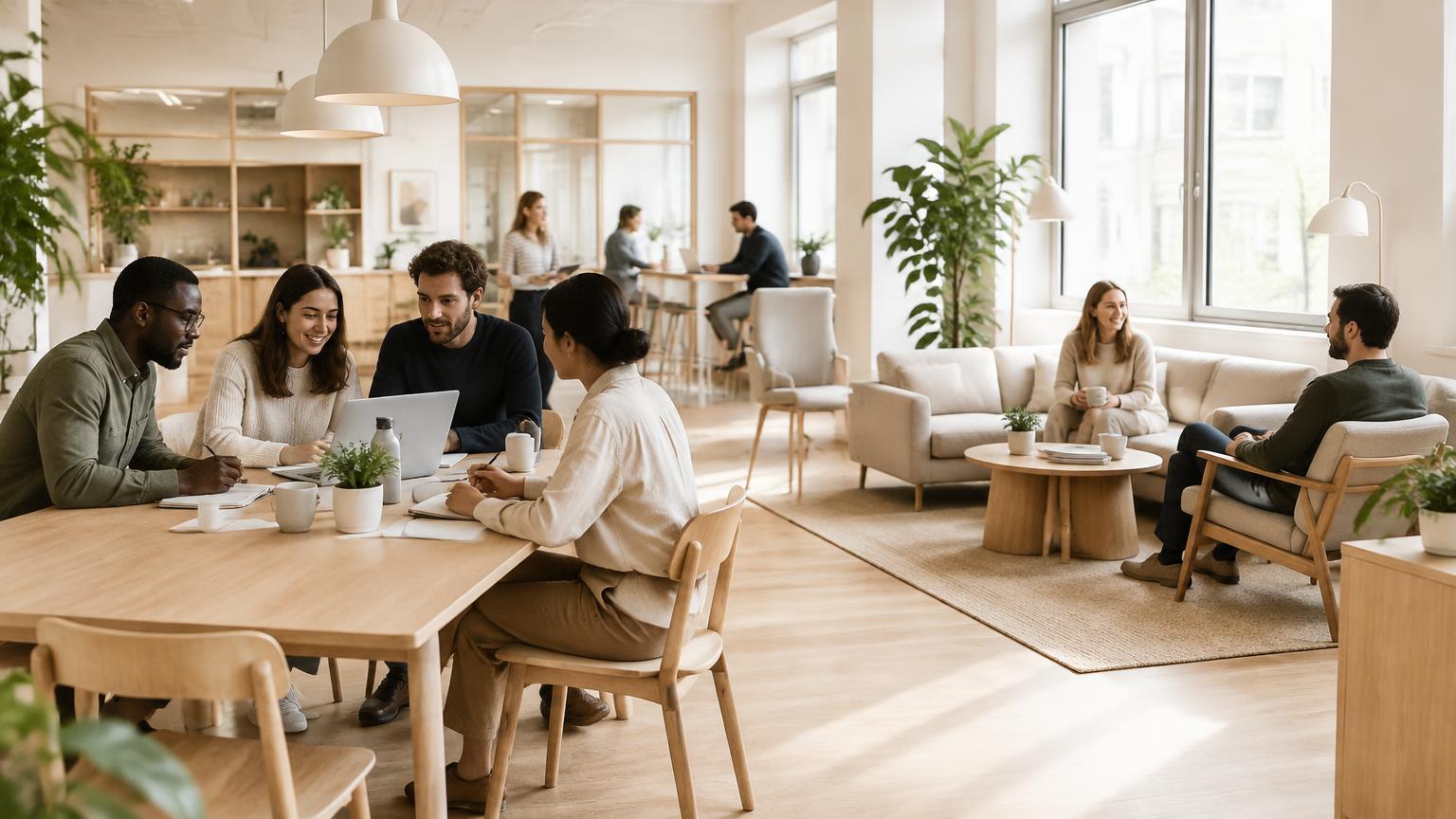
Six years after the start of the pandemic, the office trend is reversing: people are gradually returning. That is a key finding of the Drees & Sommer Workspace Benchmark Report 2026/27, which surveyed more than 200 people across 17 industries. The largest group of respondents estimates the utilisation of their space at 61 to 70 percent – in 2023/24 that figure was still between 30 and 40 percent. Occupancy has therefore nearly doubled.
Hybrid work stays – but presence is growing
Mobile working remains a firm part of working reality: for 69 percent of respondents, two to three home office days per week are part of everyday life. The usage pattern under full freedom is particularly interesting: those allowed to work from home five days a week typically do so on only three. Employees come to the office voluntarily – for meetings, workshops, joint project work and direct exchange with colleagues.
"People no longer come to the office to work through their tasks undisturbed. They come because there is a specific reason and the user experience is convincing. The role of the office is changing: it is increasingly becoming the social and collaborative centre of working life," says Sven Mylius, Associate Partner and expert for New Work concepts at Drees & Sommer.
Attractiveness determines occupancy
A central correlation in the study: offices rated as very attractive are occupied at 63 percent on average, those rated as unattractive at only 48 percent. What is in demand are modern work environments that offer the right place for each activity – retreat spaces for focused work, areas for creative collaboration and zones for informal exchange. Around 72 percent of respondents rate their offices as attractive to very attractive.
Media technology matters too: where at most one in four meeting rooms has video technology, only 39 percent of respondents are satisfied. When at least three of four rooms are equipped, satisfaction rises to 75 percent. According to the study, a room should be ready to use within 30 seconds – cutting the waiting time before meetings saves several thousand euros per day.
Leadership as a success factor
New spaces alone change little: 92 percent of respondents see managers as the central success factor for new work environments. Almost 80 percent attribute a high influence on corporate culture to the work environment – especially on collaboration across departmental boundaries. Employees expect clear target visions from their superiors and role models who live new ways of working themselves.
Less space, more quality
Although more people are coming back to the office, 54 percent of respondents expect the space per workstation to shrink – only eleven percent expect a higher space requirement. Desk sharing remains an important tool: 75 percent of study participants share their workstations fully or in part, and more than half expect their company to rely on it even more in the future. The study's conclusion: quality over square metres.
Data and technology: much potential, little implementation
63 percent of respondents report that their company uses space analytics – among companies with more than 5,000 employees the figure is 85 percent, among those with fewer than 50 employees only 38 percent. Analysis is mostly limited to booking systems; only a few use sensors or movement analysis. "Those who systematically evaluate usage data and turn it into decisions can develop space, investments and work offerings in a more targeted way," emphasises Mylius.
What this means for companies
The results confirm what we experience every day with our customers: the office is not being abolished, it is being redefined. To attract employees back voluntarily, companies need attractive, functionally convincing work environments – and at the same time a home office that is equipped ergonomically and in compliance with the law. Hybrid work only succeeds when both locations are professionally organised: from desk sharing in the office to equipment and risk assessment in the home office.
Source
- Drees & Sommer: Workspace Benchmark Report 2026/27 – The office is filling up again (press release, Stuttgart, 19 October 2026)