Why Home Office in Germany Is Here to Stay
Ifo study 2025: German academic professionals work 1.6 days per week from home – above the global average. What the numbers mean for HR, families and hybrid work models.

Since the start of the Covid-19 pandemic, home office has not only become established for German employees – it has further intensified. According to a recent Ifo study, academic professionals in Germany work an average of 1.6 days per week from home, well above the global average of 1.2 days. Coverage e.g. via the Süddeutsche Zeitung.
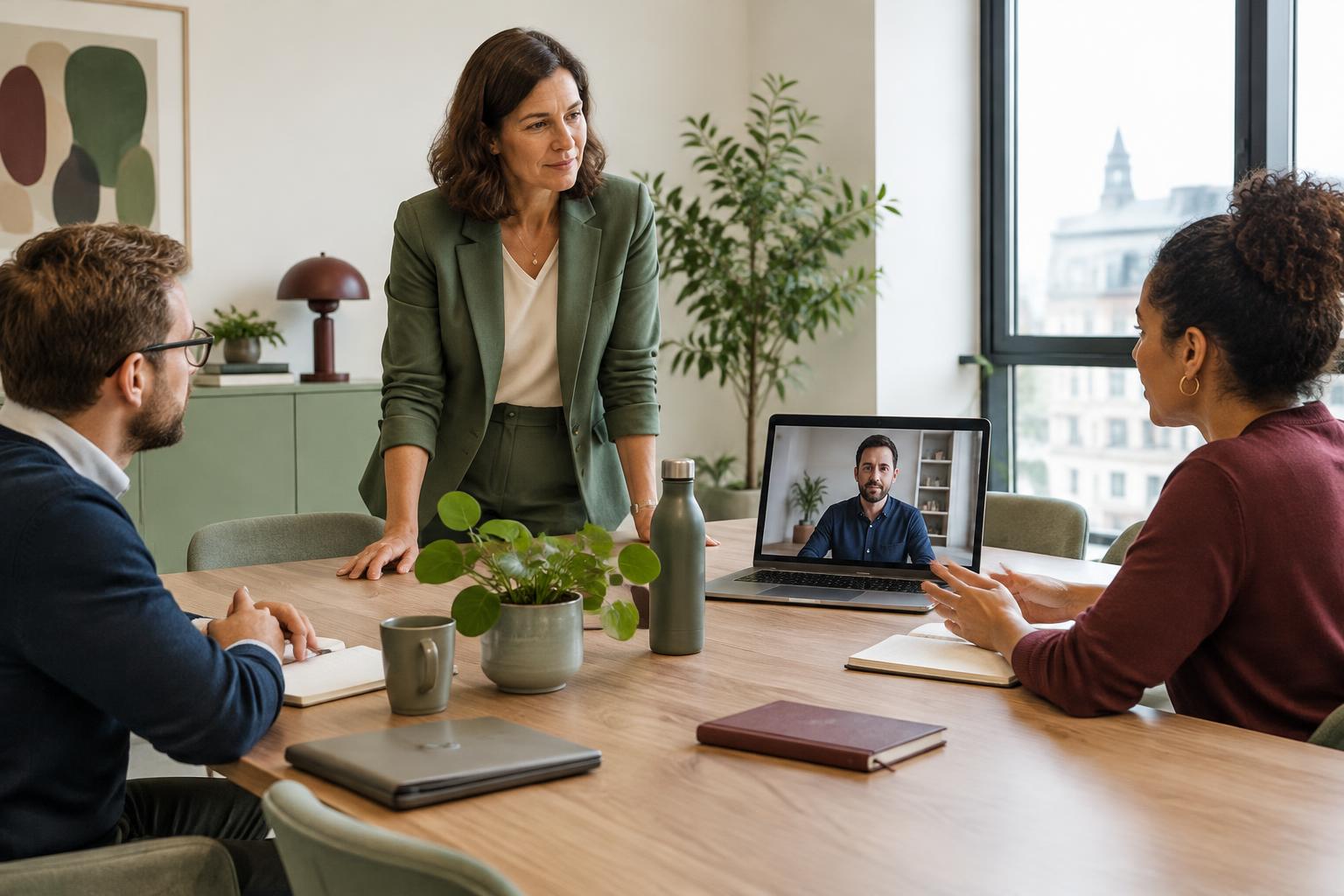
The University of Konstanz study also shows: productivity does not suffer under hybrid work. Well-coordinated office days strengthen team communication and productivity – while mobility is preserved.
While corporations like SAP, VW or Deutsche Telekom increasingly push for office presence, the data is clear: home office is not a short-lived trend, but a permanent state. In this article we explain:
- What the numbers say about our daily work life
- For which employees remote work is particularly attractive
- The immediate HR implications
1. Home office rate in Germany in detail
- 1.6 days/week in the home office for academic professionals
- Global average: 1.2 days/week – Germany is above
- In the EU only Finland is slightly ahead with 1.7 days/week
⚠️ Bottom line: the return-to-office wave of large corporations has no statistical effect.
2. Family-friendliness & gender perspective
- Employees with children work hybrid more often
- Women with children desire home office more strongly than women without children
➡️ From an HR perspective a clear signal: joint strategies for families and flexible work models are decisive.
3. Office space & corporate strategies
- Some executives demand more office time – the overall rate remains stable
- Only 19% of employees still experience increased mandatory office presence (2024: 22%)
- 8% work five days a week in the office
HR lever: flexible desk-booking concepts and hybrid workplace solutions gain importance – as does the equipment of employees at home.
4. HR perspective: recommendations
1. Establish Core Remote Days
Define on which days employees can work remotely – increases autonomy.
2. Flexible work with team coordination
Shared on-site times for meetings + remote days for deep work.
3. Ensure infrastructure & health
With the onyo setup of home office equipment, risk assessment & active breaks.
4. Build communication & culture
Foster team spirit through virtual rituals and hybrid events.
Conclusion
Home office is not a temporary trend, but an anchored component of modern work – with rising acceptance, especially among families and qualified professionals. HR leaders face the task of strategically expanding remote work and shaping it as hybrid – with clear rules, strong infrastructure and an open culture.