Sick Days in Bavaria 2024: What HR Must Learn From the New BR/BKK Data
Sick days in Bavaria are rising sharply – with huge regional differences. The BR/BKK analysis shows: health, leadership and home-office ergonomics drive absenteeism. What HR must do now.
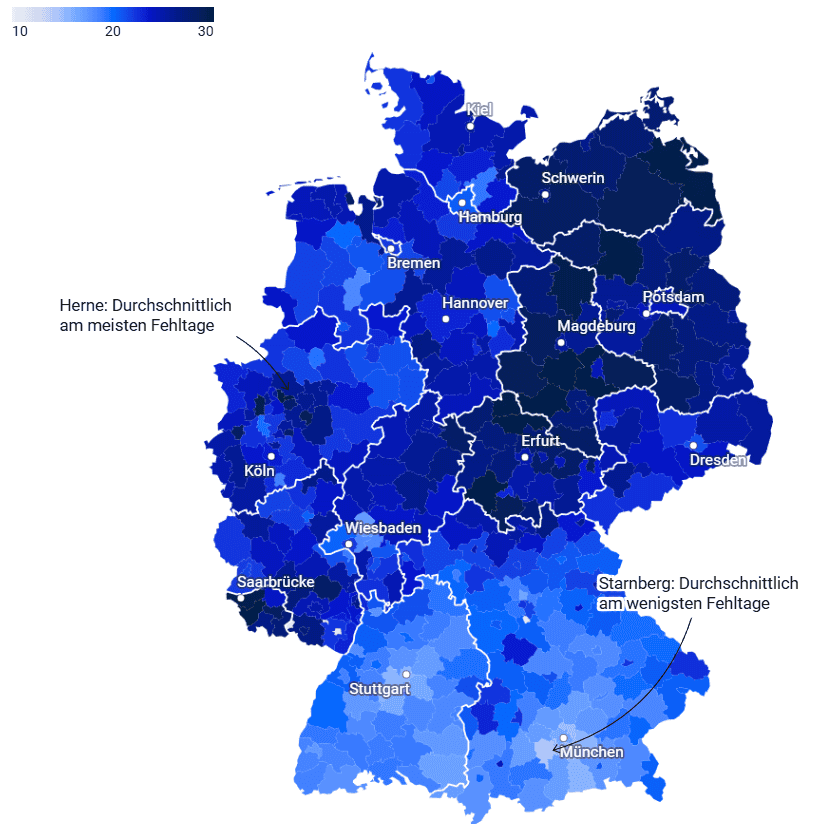
The number of sick days in Bavaria is at a long-term high – and the region shows extreme disparities. An exclusive analysis by Germany's public broadcaster Bayerischer Rundfunk (BR) together with the company health insurance funds (BKK) reveals how unevenly health is distributed and which conditions cause the longest absences.
For employers and HR the message is clear: health prevention is becoming a leadership task – in the office and in the home office alike.
1. Huge differences between Bavaria's regions
- Starnberg: 14.5 sick days – the lowest in Germany
- Munich & Ebersberg: also below average
- Kronach & Hof: over 26 sick days per year – nearly double
Psychologist Hendrik Berth (University of Dresden) attributes this to economic strength and working conditions: prosperous regions can fund better workplaces, the war for talent forces more health offerings, and income drives access to sports and prevention. Health is socially and structurally unequal.
2. Respiratory illnesses are surging
Respiratory infections accounted for around 20 % of all sick days in Bavaria in 2024. According to BKK and the Central Institute, additional cases were driven by:
- 58 % acute respiratory infections (2022)
- 41 % respiratory infections (2023)
COVID, flu waves and a higher baseline strain combine here.
3. Cleaning, logistics, transport: who is most affected
- Cleaning roles: over one month of absence per year
- Logistics, transport, manufacturing: well above average
- Main causes: musculoskeletal disorders (back, joints)
By contrast, employees in management, IT and research are absent far less often.
4. Mental strain amplifies other illnesses
Infectious-disease specialist Leif Erik Sander (Charité) summed it up: "When psychological strain is high, a respiratory infection leads to incapacity for work much faster."
- Mental illnesses have been rising for years
- They are a main driver of long absences
- Average per case: often weeks rather than days
For HR this means: mental health is no longer a soft topic – it is a business-critical issue.
5. Musculoskeletal disorders remain number one
Back pain, slipped discs and arthrosis still cause the most sick days. Risk factors:
- physical work and monotonous strain
- poor or missing ergonomics
- inadequate workplace equipment
- in the home office: improvised setups without professional equipment
6. The digital sick note (eAU) inflates the numbers
Since 2021, sick notes are transmitted digitally from doctors directly to health insurers. Effects:
- sick leave is recorded more completely
- the dark figure shrinks
- statistically more sick days appear, even if not more people are actually ill
According to BKK, this only explains a small share of the increase.
7. Leaders decide over health – literally
BKK board member Anne-Kathrin Klemm: "We can sometimes see when a manager moves to another department – and the absence figures move with them."
- Leadership directly influences absenteeism
- Bad leadership = more sick days
- Good leadership = healthier teams
Health is a culture question.
What this means for employers & HR
1. Professionalize prevention and health promotion
- Corporate health programs
- Ergonomic workplaces – in the office and at home
- Back and movement courses
- Prevention of psychological strain
2. Train leaders consistently
- Leadership directly impacts sick days
- Communication, workload management, feedback
- Awareness of mental health
3. Take the home office seriously as a risk environment
Many companies have no risk assessment for home offices, no ergonomic basics and no transparent documentation. Professional solutions like onyo Home-Office-as-a-Service systematically reduce these risks.
4. Targeted support for high-strain industries
- Body-friendly tools and equipment
- Breaks & recovery
- Back-health programs
- Long-term health strategy
5. Use data analytics to detect patterns
- Cluster absences regularly
- Look at causes, not symptoms
- Examine the impact of leadership and work environment
- Introduce targeted prevention
Conclusion: Rising sick days are a warning – and an opportunity
The Bavarian numbers make it crystal clear: health is regionally unequal, strain is rising, mental illnesses amplify absences, and leadership and working conditions are decisive.
Companies that act now secure:
- healthy, high-performing employees
- lower absenteeism
- stronger employer attractiveness
- less risk in the home office
- better retention in competitive labor markets
With well-designed, ergonomic and compliant solutions like onyo Home-Office-as-a-Service, organizations can set the right course today.